
An invader in our waters
The European green crab has found its way into the waters we love: along the outer coast, into the Strait of Juan de Fuca, the San Juan Islands and the bays of the northern Salish Sea. Where it settles, it digs up eelgrass, preys on shellfish and young Dungeness crab, and pushes out the native species that tribal and local families have depended on for generations.
The response is already underway. Tribes, state biologists, shellfish growers and volunteers are out on the tideflats, trap by trap, working to hold the line. We want to help carry that work further, and to imagine what an eradication effort could leave behind besides empty traps.
King Reef: the Puget king crab
King Reef is the banner we're raising for our own waters. At its heart is the Puget king crab, a spiny, red-orange and purple, boxy native of the deeper Salish Sea, and a reminder of what's worth protecting beneath the surface.
Picture a campaign people can see, follow and join: what lives down there, what threatens it, and how every green crab removed is a small gift back to the Dungeness, the eelgrass and the shorebirds. The king crab is the hero of the story. The green crab is the villain we're working to send home.
Soil as nursery supply
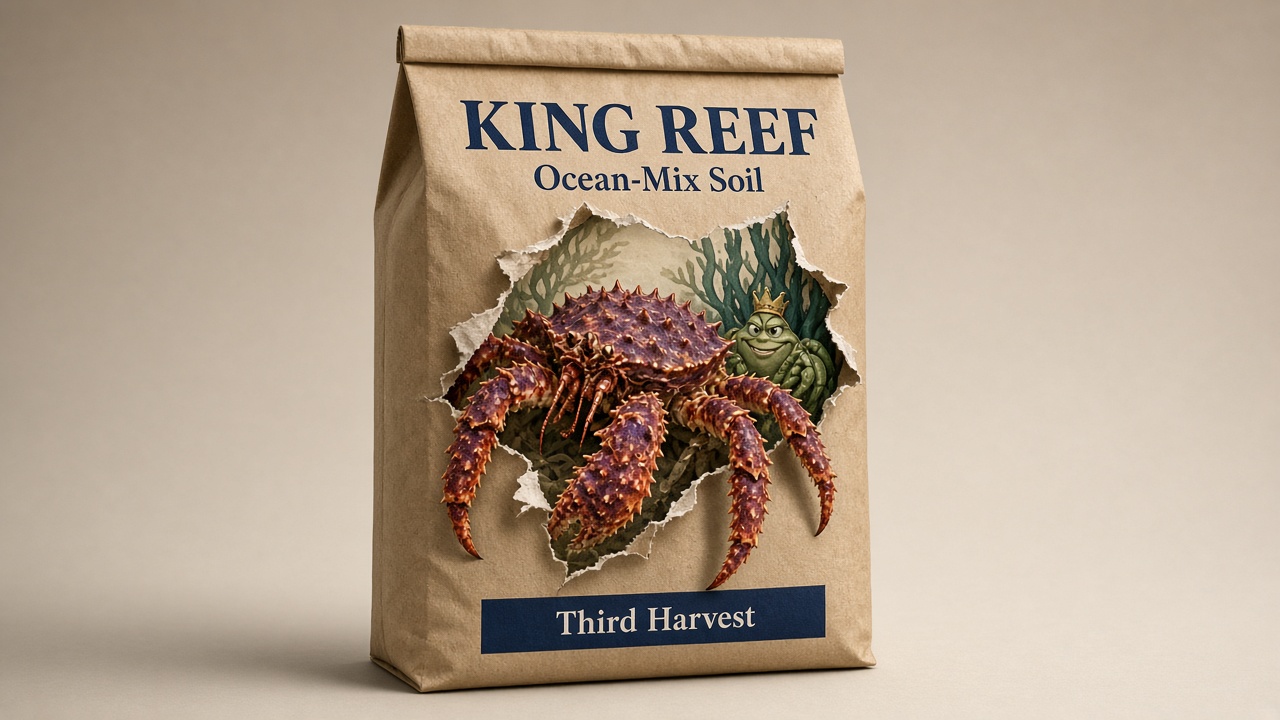
Every crab pulled from the water has to go somewhere. Today, much of it is frozen and hauled away. We're exploring a different path: turning what removal leaves behind into compost and an ocean-mix soil that feeds our own nursery. What threatens the shoreline could help raise the native plants that heal the land inland.
Working toward licensing
None of this moves ahead without the law and the people who co-manage these waters. Puget Sound king and box crab is currently closed in all Washington waters, and green crab is a prohibited species here. In Canada, green crab removal is a response effort, not a commercial fishery.
So we're working toward the permits and licensing this would need, step by step, in the open. Nothing described on this page is licensed today.
Partnerships on both sides of the water
We're in early conversations toward four partnerships on the American side and four on the Canadian side, with coastal nations who have long cared for these waters. Nothing is final, and each nation speaks for itself. The aim is a shared effort across the Salish Sea, one sea and one response, with an adoption period that lets each partner join on its own terms.
Dungeness first, king crab next
Dungeness is the proven base: a fishery the region already knows how to run well, with the boats, the buyers and the know-how in place. The Puget king crab is the premium variant we hope to grow alongside it, if and when the science and the regulators say the stocks can carry it.
Studying the cousin crabs
The king crab has relatives in these waters, including the box crabs and other lithodids of the deeper reefs. We're folding a study of these cousin crabs into the work, to learn whether any could one day support a careful sub-fishery, or whether the right answer is simply to leave them be.
Safer harvest, from below
Crabbing is some of the most dangerous work on the water. We're exploring underwater drones that tend gear and sort catch on the seafloor, so fewer people are hauling heavy pots in rough weather, and undersized or non-target crabs go back where they belong.
White-label machines, with an AI layer
We don't need to build every machine ourselves. The idea is to work with existing equipment makers under our partners' own labels, and add an AI layer that reads the catch, keeps an honest record of what was taken and released, and helps crews and regulators see the same picture.
Cleaning stations: stopping the spread
The best eradication is prevention. Cleaning stations at launches and harbors could help boats, gear and trailers leave the water without hitchhikers, so the green crab has fewer ways to reach the next bay.
A solution for waste
Fisheries are only the beginning. Shells, trimmings, storm-cast kelp and the byproducts of other industries could all feed living ground instead of a landfill. Each stream that joins in brings us closer to a coast where nothing goes to waste and the land and water heal together.
The framework behind this work was developed with John Worthington