
About Me
I'm not a policy person. I grew up in the Pacific Northwest, in the Elwha Valley, and fell in love with this land. I'm not an enrolled tribal member, but this is home.
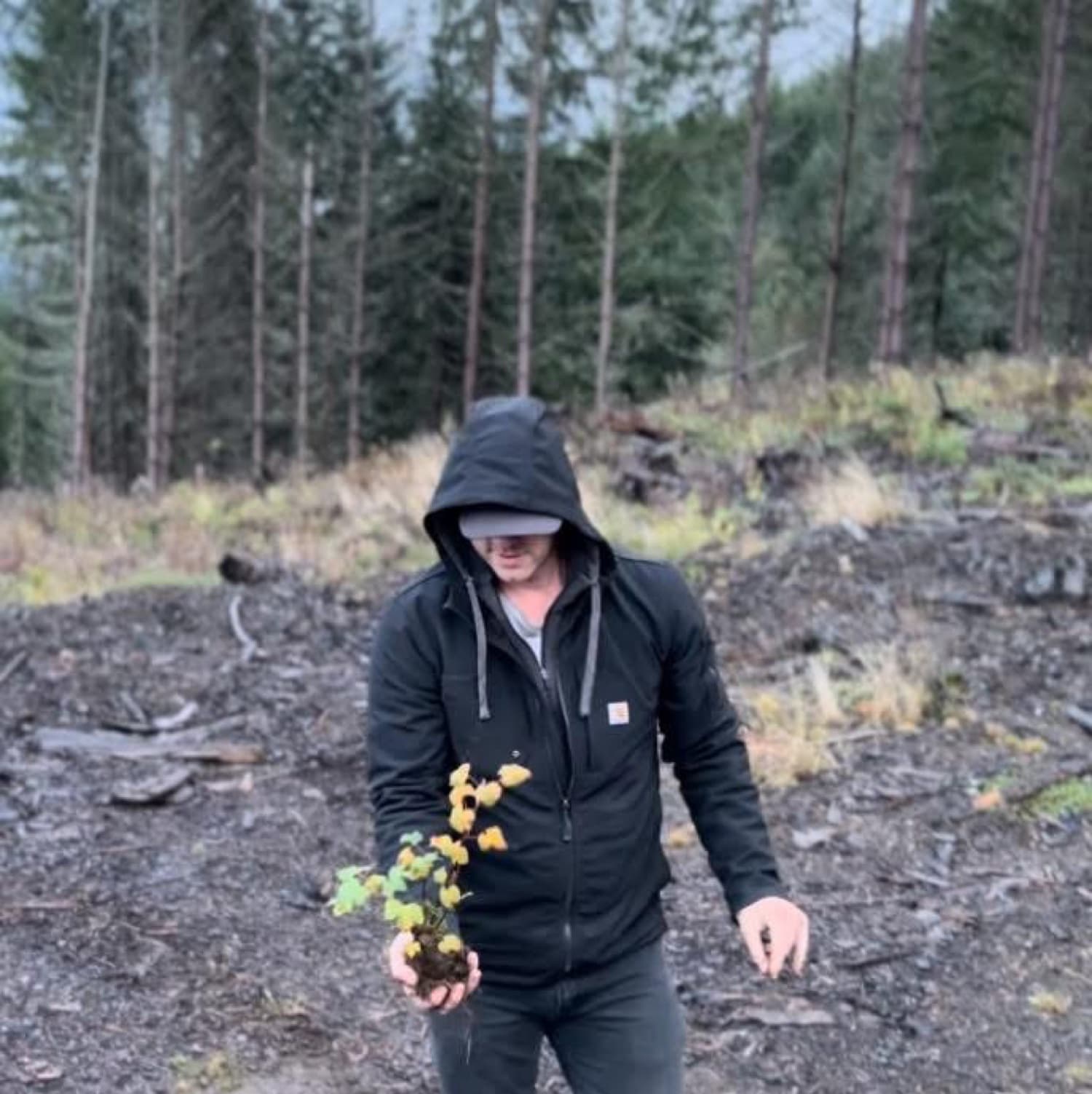
In Quinault, I chased down tree poachers and found them. I restored an old road to a cabin, then restored the ground around that cabin to its native state. That work taught me more than any book could.
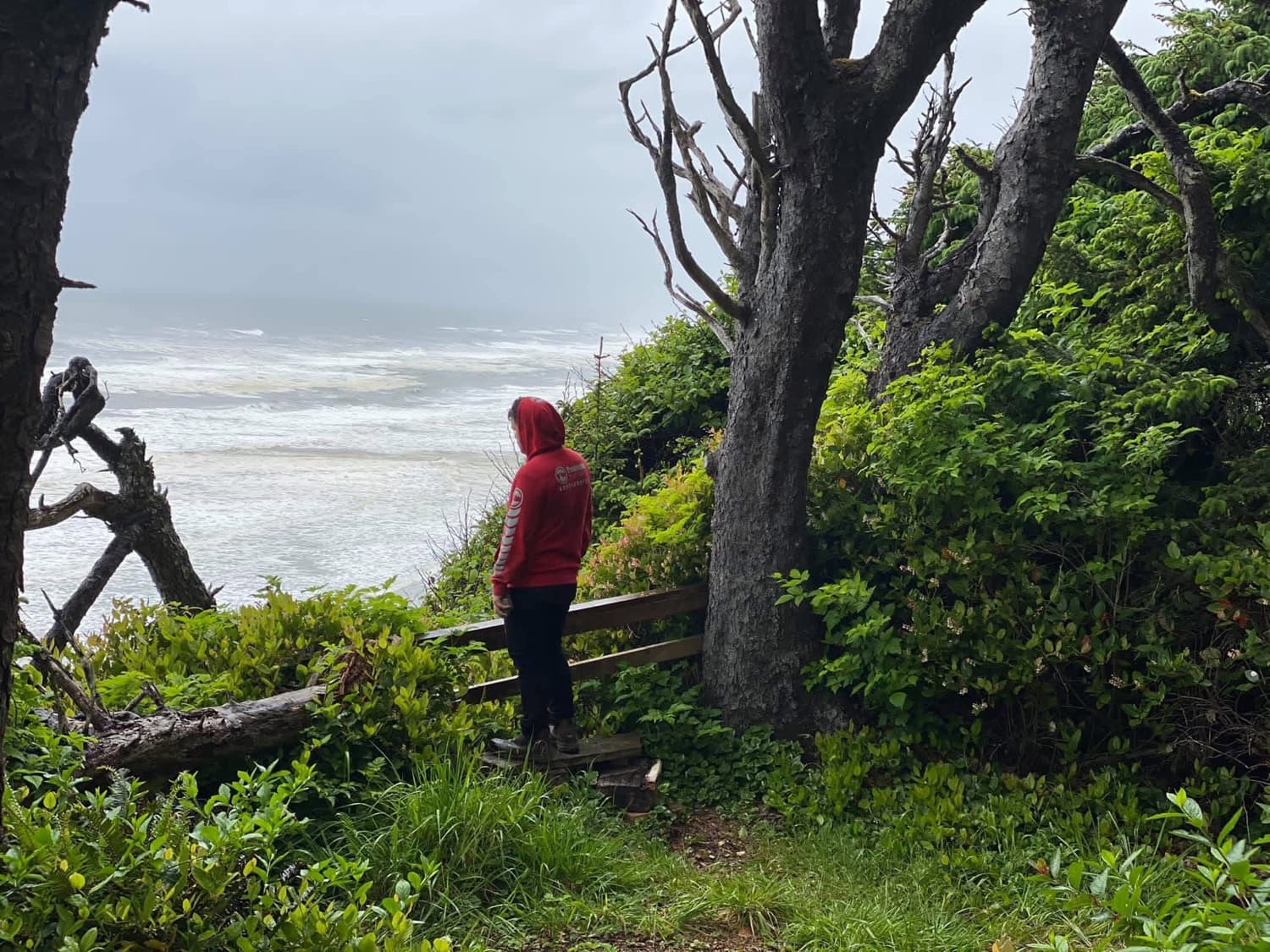
I took my brother out to the coast there once. He stood looking out at the ocean. It was one of the last times I remember the Lord speaking to me, letting me know my brother wouldn't be with me, and giving me time to process the loss. I felt connected to that land then. I still do, deeply.
On Valentine's Day, my sister's birthday, I was closing on a fee-simple property, my head full of ideas. I stopped to eat at a restaurant in Amanda Park, neutral territory for everyone, and got to talking with a woman there. I had no idea who I was talking to. After we ate, we kept talking, and I brought up revisiting the Treaty of Point No Point. That drew quite a reaction. Point No Point is the S'Klallam and Skokomish treaty. Her own treaty was most likely the Treaty of Olympia, which the Quinault signed in 1855 and 1856, and I should have known that. I learned that day that history as local people taught it to me and what actually happened were two different things. I had more to learn, and I still do.
She asked me to be a guardian. Within a couple months, I walked away from that escrow. It sat on Allotment Act land. Had there been a mechanism where I could have deeded it straight back to the Quinault Nation at that moment, I would have.
She encouraged me to go back and study. I did. And when I studied the Allotment Act, I realized it had changed the game in ways Point No Point alone never could.
I've accepted that guardian challenge, out there.
I've been approaching landowners about pathways for reappropriation where no one loses money and any transition is respectful. There's interest. No names, and no commitments yet.
I find the Quinault Nation incredibly peaceful.
I've always been an advocate for First Nations people. My nieces and nephew are as brown as they come, and I love them dearly. I don't see them through a lens of being brown or First Nations. It's all love. I believe most Americans are like that, and that the division we hear so much about is louder than it is common.
I've also seen prejudice on both sides. Most of the time it comes down to people fighting over resources that get stretched thinner every year: fewer fish, less land, fewer jobs. It has never been more expensive to be human. I don't believe more grant writing and perpetual lawfare will fix that, so we're trying a different approach.
What most people in our community don't see is how little support First Nations actually get. A lot of folks think they have it easy. Healthcare and some programs may make certain things easier. But most reservation land is held in trust and generally can't be mortgaged without federal approval. So tribes and tribal members often have a harder time reaching capital, even on their own land, and many have to go off their land to take part. Third Harvest wants to help level that playing field.
Here's how this feels. It's like weaving a cedar basket without ever being taught how. We'll go slowly and do our best not to hurt feelings or damage the relationships we need to build bridges and walk across them together.
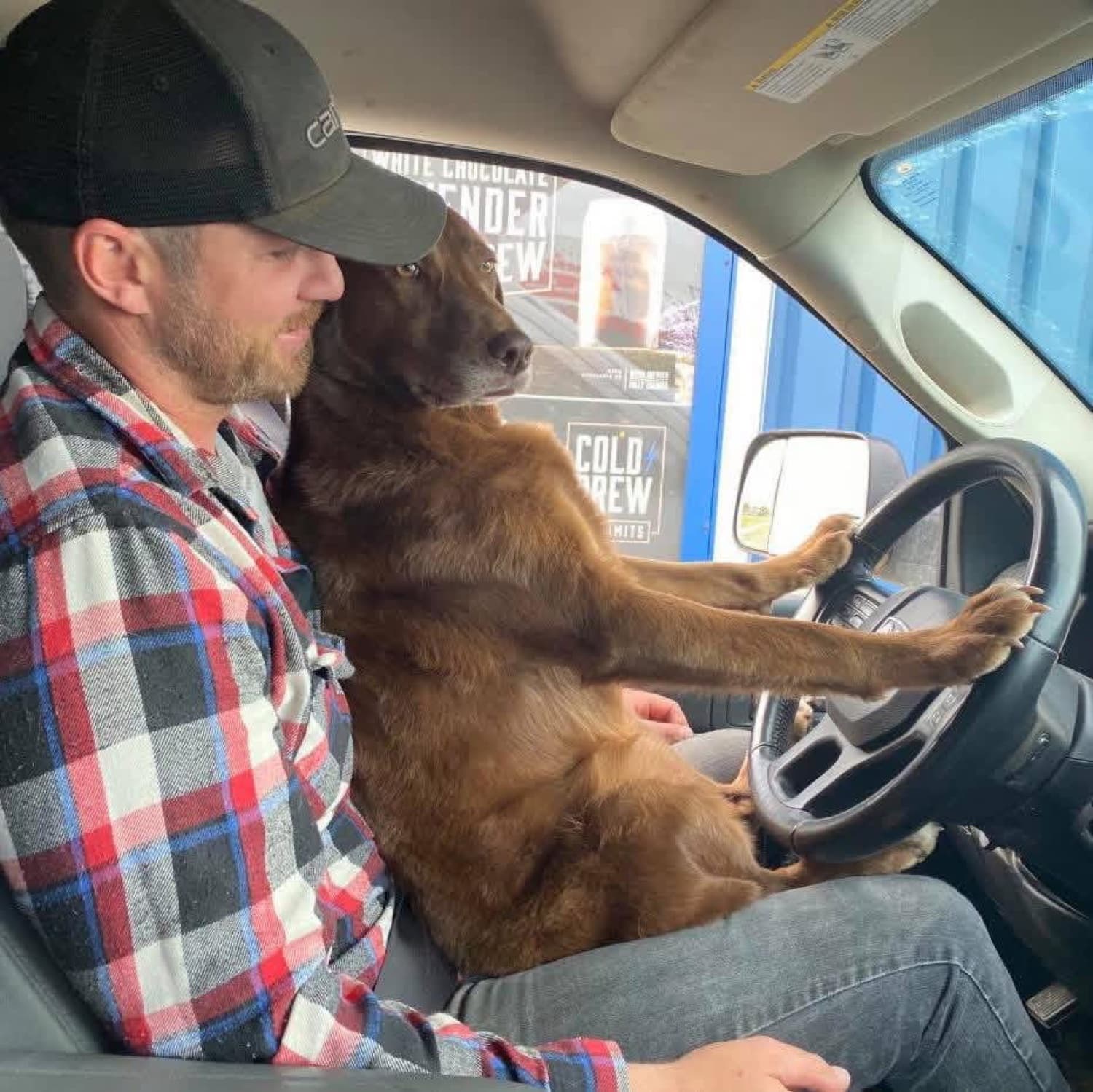
Shyla, my rescue sidekick of ten years, who's always ridden along as my passenger princess.
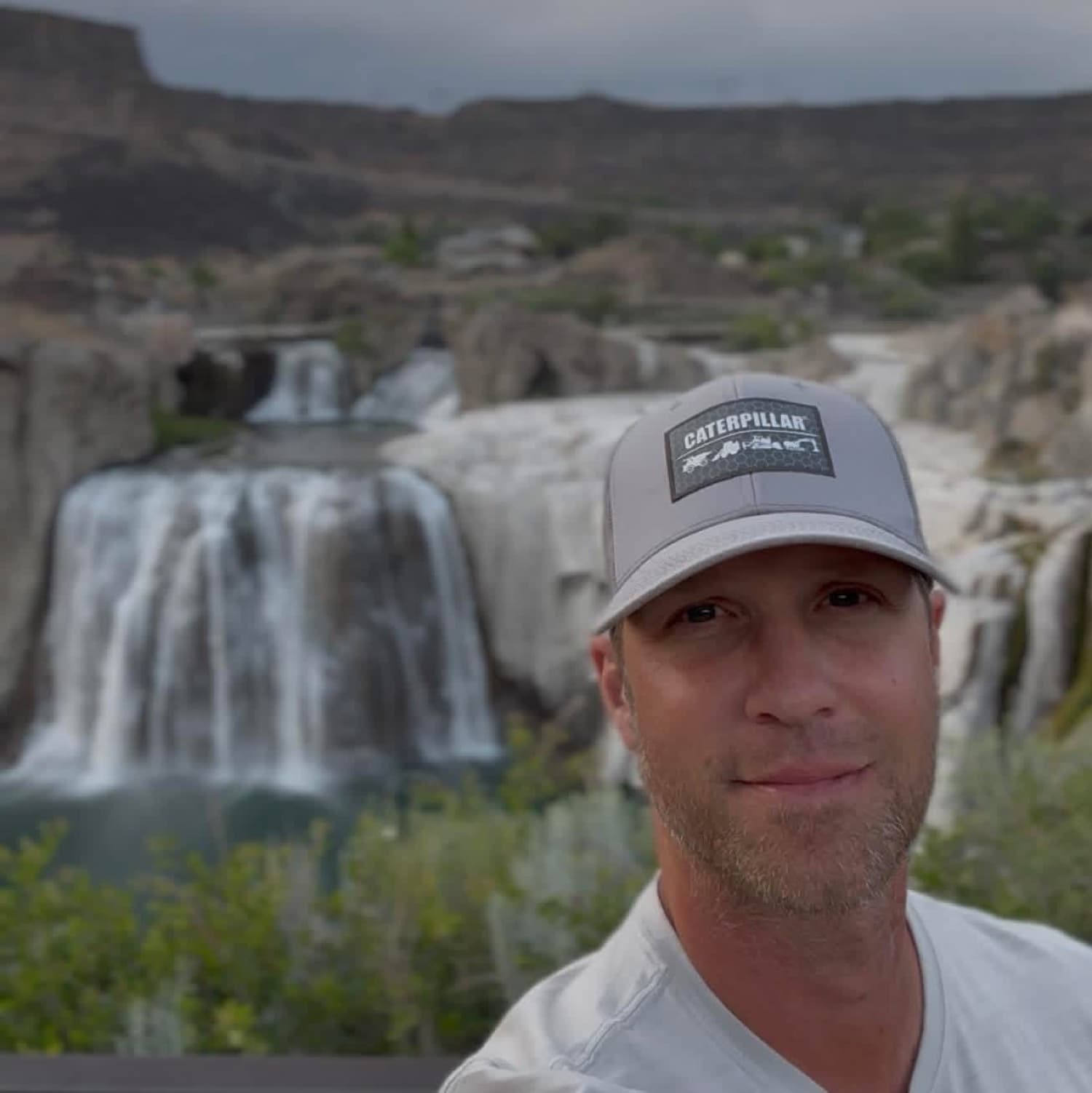
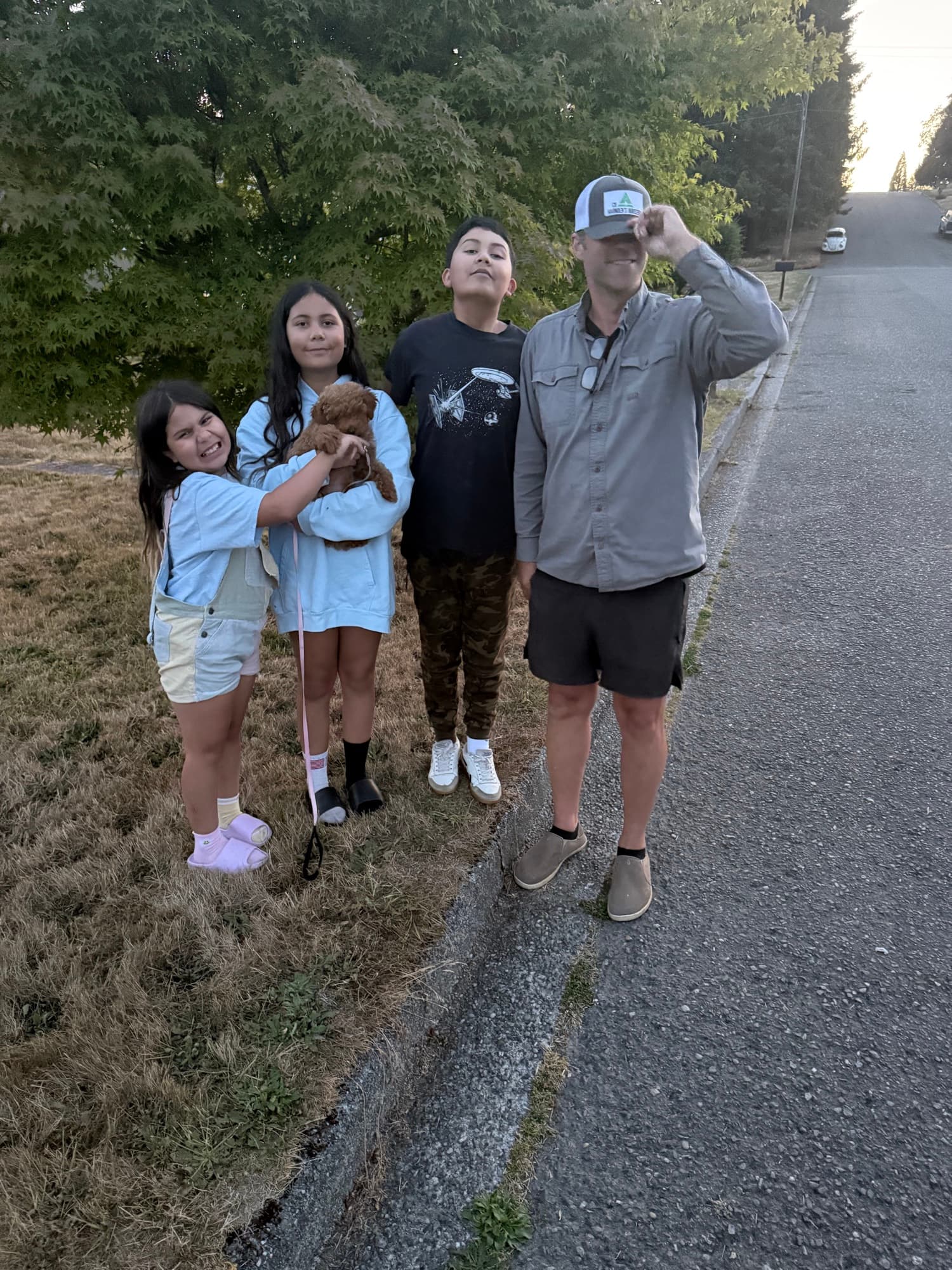
"You can't have true sovereignty without ... financial independence as well." (George Peterson, April 8, 2026)
"It is time. It's been long past time for us to find a solution that works for everybody, and I believe at the core of my heart and my soul that this is what, in part, God put me on this planet for, and in part what it means to be a guardian. I'm not just looking at the micro for my family, I'm looking at the macro for all of our families, and I'm not a politician." (George Peterson)
What Happened Here
In 1855, Governor Isaac Stevens brought treaties to the peninsula and the Sound:
- Point No Point (January 26, 1855): the S'Klallam, Skokomish, and Chimakum peoples ceded their lands and reserved a small tract on Hood Canal.
- Point Elliott (January 22, 1855): the peoples of Puget Sound to the east signed.
- Neah Bay (January 31, 1855): the Makah signed. It is the only treaty that guarantees the right to whale.
- Olympia, or Quinault River (negotiated July 1855, signed January 1856): the Quinault, Quileute, and Hoh peoples signed.
Each treaty kept the right to fish at "usual and accustomed" places, "in common with" the newcomers.
Then the deal kept changing. The Dawes Act of 1887 broke reservations into individual allotments and opened "surplus" land to settlers. Nationally, tribal land fell from about 138 million acres in 1887 to about 48 million by 1934. On the Quinault Reservation, allotment began in 1905. By 1935 the reservation had been split into 2,340 trust allotments, most of them 80 acres, and about a third of that land later left trust. The Burke Act of 1906 made it easier for allotments to leave trust, and many were lost to sales and tax foreclosures. The Lower Elwha Klallam waited until 1936 for land and until 1968 for a proclaimed reservation. The fishing rights promised in 1855 weren't upheld in federal court until the Boldt decision in 1974. And for about a century, the Elwha dams (1913 and 1927) blocked the salmon runs those treaties had counted on, until the dams came down in 2011 and 2014.
"...the tribal nations feel unrepresented, especially the ones in Washington. That their treaty rights were not done in good faith in terms of evaluation. So this normalizes ... the wrongs of the past. And sets us on a new course." (George Peterson, July 16, 2026)
None of this means the peninsula was peaceful before 1855. Nations here traded, raided, and fought with each other long before Europeans arrived, and that conflict continued alongside colonization. The Point No Point treaty itself had the signers promise not to "make war on any other tribe, except in self-defence." Honest history holds both truths. Our goal isn't to assign blame. It's to help heal wounds, and to give First Nations a real chance to take part in their own land-back agenda, on their own terms.
Voices from the Record
“My heart is white, so are those of my people, and we will never stain it with blood.”
“We can say nothing but what this flag tells. We give our hearts to you with it in return for what you do for us.”
“Let us keep half of it, and take the rest. Why should we sell all? We may become destitute. Why not let us live together with you?”
“Great Chief, what shall we eat if we do so? Our only food is berries, deer, and salmon.”
“…to allot the lands in said reservation in severalty to any Indian located thereon…”
“…thereafter all restrictions as to sale, incumbrance, or taxation of said land shall be removed…”
The Chimakum
- Where they lived: the Chimakum lived around Port Townsend Bay and the Quimper Peninsula.
- Origins: the Chimakum Tribe writes that "Linguistic evidence presented by J. V. Powell, Ph.D., informs us of a separation of the Quileute and Chemakum [Chimakum] some 1,200 years ago" (chemakum.org).
- The attack on Tsetsibus: the last Chimakum stronghold near Port Townsend. The sources give different dates:
- About 1847: Suquamish warriors under Chief Seattle, joined by S'Klallam warriors (historian David Buerge).
- About 1850: Edward Curtis, The North American Indian, vol. 9.
- 1856 or 1857: National Park Service ethnography, citing Powell (1981).
- Earlier pressure: recorded accounts also describe earlier attacks and introduced disease, including smallpox. Details and source types are on the History page.
- Survivors: survivors remained. Chimakum leaders signed the Treaty of Point No Point on January 26, 1855.
- At the council: Kul-kah-han, "the Chem-a-cum [Chimakum] chief," presented a white flag and said, as recorded by Stevens's party: "We can say nothing but what this flag tells. We give our hearts to you with it in return for what you do for us. We were once wretched, but since you came you have made us right. Formerly other Indians did wrong us, but since the whites came we are free and have not been killed."
- These words were spoken through interpreters and recorded by the governor's party, so they're secondhand. Source: Hazard Stevens, The Life of Isaac Ingalls Stevens, vol. 1 (1900), ch. XXV, https://www.gutenberg.org/ebooks/43589. Full council quotes are on the History page.
- Indian Claims Commission: Chimakum territory was later awarded to the S'Klallam, who claimed the Chimakum had abandoned it (chemakum.org).
- 2022: the Chimakum formed a council to seek recognition.
- The "Last of the Chimakums": George's framing, not a historical label. George would like to see that story become a story of revival.
- Sources:
- https://content.lib.washington.edu/aipnw/buerge2.html
- https://www.chemakum.org/our-history
- https://npshistory.com/publications/olym/prehistory_ethnography/chap5.htm
- The History page has the full source list.
Between Nations, Today
The picture among nations today is uneven. Some, like the Jamestown S'Klallam Tribe, federally recognized in 1981, have built real economic strength. Jamestown reports more than 1,000 employees and calls itself one of the largest employers on the Olympic Peninsula. In our view the Quinault Indian Nation is among the stronger nations too.
Jamestown's own story is one of staying put. Under the Point No Point treaty, the S'Klallam were expected to move to a reservation at the head of Hood Canal, alongside the Skokomish. The Dungeness-area S'Klallam bands, ancestors of today's Jamestown S'Klallam Tribe, chose to stay on the peninsula. In 1874, led by Lord James Balch, they pooled $500 in gold coin and bought 210 acres along the Strait from local settlers Richard and Jane Delanty, and the community became Jamestown. That land wasn't sold off. The tribe describes the Jamestown Beach land as still privately held today, and the tribe itself also owns land there. After federal recognition, the tribe built its government campus and reservation at Blyn.
Other peoples are still waiting to be recognized at all:
- The Chimakum people lived around Port Townsend Bay and the Quimper Peninsula. (I think of them as a Clallam-area tribe.) According to historian David Buerge, around 1847 Suquamish warriors under Chief Seattle, joined by S'Klallam warriors, attacked Tsetsibus, the last Chimakum stronghold near Port Townsend. Other accounts give different dates: Edward Curtis says about 1850, and a National Park Service study says 1856 or 1857. Survivors remained, and Chimakum leaders signed the Point No Point treaty in 1855. The Indian Claims Commission later awarded Chimakum territory to the S'Klallam. In my view, any present-day claim by Jamestown to be the ancestral holders of Chimakum land is incorrect. In 2022 the Chimakum formed a council to seek recognition, and I'd like to see the story of the "Last of the Chimakums" become a story of revival.
- The Chinook Indian Nation, whose name the Chinook salmon carries, was federally recognized in January 2001. That decision was reversed on reconsideration in July 2002.
Third Harvest supports Chimakum recognition, Chinook federal recognition, and recognition in general. (Our statement of support is on its own page. Its petition button is shown, but form collection is temporarily disabled pending security implementation. We don't collect names, emails, signatures, or contact details yet.)
We'll also say plainly what many people out here already know. The barriers aren't always federal. As some nations grow stronger, their interests can come into conflict with a neighbor's, and public records show nations opposing one another's recognition bids. Saying so isn't an attack on anyone. It's part of the history we have to be honest about if we want to heal it.
A Possible Amendment Act
One idea we'd like to help put on the table could be called an amendment act. It would look back at the places where the original promises were changed after the fact, starting with the allotment-era rules that moved land out of trust, and ask, together, what a fair correction looks like. We don't have that answer, and it isn't ours alone to write. We just want to help start the conversation.
A Possible Third Agenda Item: Grind, Don't Burn
We'd support a no-burn rule for slash piles, with grinding required instead. If policy heads that way, we'd propose a grant program to help forest operators make the switch: a one-time, non-repayable grant of one and a half times the cost of the machine. Harvest Oracle could potentially help assess whether an operation meets its on-site retention and removal parameters. That's a possibility we're exploring, not something available today.
How Ownership Works
Third Harvest plans to reduce its own ownership to 10%. A succession plan is built in from the beginning, so there's no guesswork. That plan runs ten years. It gives First Nations breathing room to adopt at their own pace while the Oracle build-out moves quickly. The first First Nations to join get a seat at the table and help shape what comes next.
This adoption period gives First Nations a chance to join the industry on their own terms, but it doesn't force anyone to, and the industry can still grow and thrive without it.
In the same spirit of peace and healing, any nation that takes part in Harvest Oracle commits to working through disputes with other nations in good faith, through their own processes and the courts, and to keeping those disputes from becoming barriers to the shared work here. Third Harvest takes no side in any dispute between nations.
Land and the Next Generation
We also believe some state land should be returned to local towns and townships, so the next generation can afford to live where they grew up. That could bring property values down. We think that's acceptable, because affordability is the benefit. And this isn't for one group. It's for all people and all townships on the peninsula.
Our hope is bigger than any one parcel. We want food, housing, and clothing to be affordable here at home. With the singularity coming, with our geography, and with ports and airports that sit underused today, the Olympic Peninsula could become one of the great epicenters of the Western Hemisphere. It starts with a comprehensive idea.
What We Do on the Ground
Municipal work is at the core of what we do. We help towns replace grass with low-maintenance native plants, which means less mowing, less water, and fewer chemicals.
Third Harvest sees forestry from beginning to end game, from the seedling to the last byproduct. We aim for zero waste and as little negative environmental output as we can manage.
One program we're exploring is a basket made from forest waste: a biodegradable box that holds a plant through a couple of seasons in retail and wholesale nurseries, in place of a petroleum-based pot.
The Monopoly Board
Think of a Monopoly board. Most of us spend our lives on the perimeter, the little properties around the edge that get bought, sold, and built on. That's where the houses go, and that's where the fights usually are.
But the board isn't decided on the perimeter. The center of the board, the big working forest, sets the rules for everything around it. It's taxed differently, regulated differently, and it pays for schools, counties, and fire districts in ways most people never see. In this game, commercial forest controls the whole board.
Then there's the Parkway, the high-value stretch everyone wants to land on. And there are two decks of cards. Chance is calculated risk: markets, prices, weather, permits. You can't control the draw, but you can prepare for it. Community Chest is the treasure we share, the revenue that comes back to the community when the land is cared for and harvested well.
Picture someone handing out the railroads and the utilities before the first roll. The winners would be picked before the game started. That's what happens when the rules are settled by whoever happens to be in the room. Transparency is the only way to an equal playing field, and it's the core of Third Harvest's models and technology.
A lot of the markets on this board are controlled. How much timber comes off public land, where you can build, and how close to a stream you can work are set by rules, not just by supply and demand. That isn't good or bad by itself. It means the rules matter, and people should be able to see them clearly and take part in writing them.
Third Harvest wants to help everyone at the table, tribal and non-tribal, read the board the same way.
Who gets a seat at the table
In Monopoly, if someone handed out the railroads and the utilities before the first roll, the winners would be decided before the game began. Land rules can work the same way. Some parties get two doors into the rules: a seat at the table where the rules are negotiated, and standing to go to court over them afterward. In 1998, during the Forests & Fish negotiations over Washington's logging rules, the environmental caucus left the table, and environmental groups sued over the existing rules that November. The rules were finished by the remaining caucuses in 1999. Nobody broke the law. But it shows how much depends on who is in the room and who knows what's being decided. Transparency is the only way to an equal playing field, and it's the core of Third Harvest's models and technology.
Critical areas and usable land (the Growth Management Act)
- Critical areas: every county "shall adopt development regulations that protect critical areas" (RCW 36.70A.060(2)). These are wetlands, aquifer recharge areas, fish and wildlife habitat, frequently flooded areas, and geologic hazard areas (RCW 36.70A.030).
- Best available science: counties "shall include the best available science" (RCW 36.70A.172(1)). Under the Commerce rule, best available science "is not the sole factor" (WAC 365-195-900(3)).
- County maps: Clallam County's critical areas maps "are advisory only" (CCC 27.12.050).
- Sources:
By the Numbers
Clallam County
- Median household income: $70,370 (ACS 2020–24). That ranks 29th of 39 Washington counties and is about 28% below the state's $98,141. The state OFM estimate for 2025 is $78,139.
- Per capita income: $42,433
- Poverty: 10.6%
- Median home value (ACS): $421,800, about 6.0 times median household income. Washington is 5.8 times and the U.S. is 4.1 times.
- Median sale price: $293,000 in 2018 and $499,950 in 2025, about 71% higher (UW Runstad Center)
- Housing affordability index, Q4 2025: 72 for the median buyer and 56 for first-time buyers. Statewide figures are 72 and 57. Below 100 means the typical household can't afford the typical home.
- One local builder estimates that about 39% of households could afford a median-priced home in 2025, down from 65% in 2018. This is a single estimate, reported by the Peninsula Daily News, October 2, 2025.
- About 31% of households spend 30% or more of income on housing.
Grays Harbor County
- Median household income: $64,414. That ranks 35th of 39 and is about 34% below the state.
- Per capita income: $34,290
- Poverty: 15.9%
- Median home value (ACS): $314,000, about 4.9 times income
- Median sale price: $191,600 in 2018 and $330,370 in 2025, about 72% higher
- Housing affordability index, Q4 2025: 88 for the median buyer and 69 for first-time buyers
- About 31% of households are housing-cost burdened.
Lower Elwha Reservation
- Median household income: about $51,000, roughly 63% of the U.S. median
- Poverty: about 29%. The survey sample is small, with a margin of about ±10 points.
Recognition
Third Harvest supports:
- Recognition for the Chimakum people, starting with recognition of their ties to their land and moving toward federal acknowledgment, if they choose to pursue it.
- Federal recognition for the Chinook Indian Nation.
- Recognition in general: a fair, transparent path for any people seeking to be recognized.
- Any bands seeking to restore their distinct identities, including Queets and Hoh.
On point 4: the Hoh are already a federally recognized tribe. The Queets are part of the Quinault Indian Nation. We don't claim that either the Queets or the Hoh want to change their current status. We support each people's right to define its own identity, in whatever form its own members choose.
We believe the healing this peninsula needs starts with being seen. That's why we support recognition: it's a matter of record and dignity, not a political side.
What this is, and what it isn't. This is Third Harvest Inc.'s own statement of position as a company. It is not a legal filing, petition, or submission on behalf of any tribe, nation, band, or person. Third Harvest doesn't represent any nation, isn't acting as anyone's agent or advocate in any proceeding, and no attorney-client or fiduciary relationship is created or implied. Each nation speaks for itself.
Form collection is temporarily disabled pending security implementation.
Learn more here
Chinook Indian Nation
- 1851: "The United States negotiated treaties with these separate Chinook bands in 1851, but the Senate did not ratify them." 1855: "Chinook representatives refused to sign a treaty negotiated in 1855." Both quotes are from the Federal Register, 67 FR 46204.
- 1873: the Quinault Reservation was enlarged for "fish-eating Indians on the Pacific coast," which "has been interpreted as including the Chinook" (67 FR 46204).
- Jan 9, 2001: acknowledged (66 FR 1690).
- Aug 1, 2001: the Interior Board of Indian Appeals affirmed the decision on the matters within its authority, and referred nine issues from the Quinault Indian Nation to the Secretary. Two other parties also asked for reconsideration, the Columbia River Crab Fisherman's Association and Michels Development Company (36 IBIA 245).
- July 12, 2002: acknowledgment declined on reconsideration (67 FR 46204).
- 2009: H.R. 3084, the Chinook Nation Restoration Act, was not enacted.
- 2025: the Chinook ended their bill work with Rep. Gluesenkamp Perez over language excluding resource rights (OPB; ICT).
- 2025–26: the Chinook lawsuit seeking recognition through the courts was dismissed. The Ninth Circuit affirmed (No. 24-3629, June 17, 2025), and the Supreme Court denied review (No. 25-313, March 23, 2026).
- Current status (Oct 2026): not federally recognized. Interior's 2025 rule (90 FR 3627) opened a conditional re-petition process for denied groups. I didn't confirm whether the Chinook have filed one.
- 2026: a Quinault fishing-boundary request covering Willapa Bay and the Columbia is on appeal. The Chinook and the Shoalwater Bay Tribe oppose it (Chinook Observer, July 19, 2026).
- Sources:
- https://www.federalregister.gov/documents/2002/07/12/02-17551/reconsidered-final-determination-to-decline-to-acknowledge-the-chinook-indian-tribechinook-nation
- https://www.bia.gov/sites/default/files/dup/assets/as-ia/ofa/petition/057_chinoo_WA/057_36ibia245.pdf
- https://chinookstory.org/wp-content/uploads/2016/11/sharp-testimony.pdf
- https://www.opb.org/article/2025/05/08/chinook-indian-nation-federal-status-uncertain-again-after-political-break/
- https://ictnews.org/news/chinook-indian-nation-rejects-recognition-without-rights/
- https://law.justia.com/cases/federal/appellate-courts/ca9/24-3629/24-3629-2025-06-17.html
- https://www.supremecourt.gov/docket/docketfiles/html/public/25-313.html
- https://www.federalregister.gov/documents/2025/01/15/2025-00709/federal-acknowledgment-of-american-indian-tribes
- https://chinookobserver.com/2026/07/19/bitter-fight-blowing-up-over-columbia-river-willapa-bay-fishing-rights/
- Tribe's own site: https://chinooknation.org/
Chimakum
- In the Chimakum's own words (Chimakum Tribe, "Our History," https://www.chemakum.org/our-history, fetched Oct 15, 2026): "In the summer of 2022, we formed a Council to realize our purpose in the just and equal recognition of Chemakum [Chimakum] people and reclaim, restore, and promote our history and culture, to preserve our sacred link to the land for cultural and sustenance purposes, now and forever." The same page says: "But. We are still here."
- Origins (tribal and oral): "Linguistic evidence presented by J. V. Powell, Ph.D., informs us of a separation of the Quileute and Chemakum [Chimakum] some 1,200 years ago." Quileute oral stories describe "a giant flood" separating the peoples (chemakum.org).
- 1820s–1857: a series of attacks. See the History page for the dated accounts and their sources.
- Jan 26, 1855: Chimakum leaders signed the Treaty of Point No Point. The original cover sheet (Ratified Indian Treaty 284) reads "Treaty with the S'Klallam, and also the Sko-ko-mish, To-an-hooch and Chem-a-kum [Chimakum], Tribes" (digitreaties.org).
- 1859–1860: Swan described "a remnant of the Chemakum [Chimakum] tribe of about one hundred persons… reckoned by the Indian Department as Clallams" in 1859. In 1860 he recorded a census of 73.
- Aug 24, 1871: people of the qatáy village at Port Townsend were forcibly removed to Skokomish, and the village was burned (chemakum.org).
- Indian Claims Commission: Chimakum territory was awarded to the S'Klallam, who claimed the Chimakum had abandoned it (chemakum.org).
- 2022: the Chimakum council formed to seek "the just and equal recognition of Chemakum [Chimakum] people."
- Current status (Oct 2026): not federally recognized. No petition was found on BIA's 2013 petitioner list, and the 2025 re-petition rule doesn't apply to a first-time petitioner. The general requirements are in 25 CFR 83.11.
- Sources:
Hoh Indian Tribe
- July 1, 1855 / Jan 25, 1856: the Hoh signed the Treaty of Olympia (Quinault River Treaty) with the Quinault, Queets and Quileute (UW Center for the Study of the Pacific Northwest; Governor's Office of Indian Affairs (GOIA) treaty text).
- Sept 11, 1893: an Executive Order set aside land "as a reservation for the Hoh Indians not now residing upon any Indian reservation" (American Presidency Project).
- The tribe describes itself this way: "The Hoh River Indians are considered a band of the Quileutes but are recognized as a separate tribe." The reservation is 443 acres (Hoh Tribe).
- 1969: the constitution was adopted (election May 24, 1969; approved July 1, 1969), under the Indian Reorganization Act (National Indian Law Library; Hoh constitution). The task brief's "recognized since 1969" is not confirmed as a recognition date. What's confirmed is the 1969 constitution. The 1893 reservation and treaty status predate it.
- Dec 22, 2010: the Hoh Indian Tribe Safe Homelands Act (Public Law 111-323) moved land into trust to expand the reservation upland. Congress found the reservation "within a tsunami zone" with "90 percent of the reservation… within a flood zone" (House Report 111-306).
- Current status: "a federally recognized Indian tribe" (House Report 111-306).
- Sources:
- https://www.presidency.ucsb.edu/documents/executive-order-creation-hoh-river-reserve
- https://hohtribe-nsn.org/culture/
- https://www.narf.org/nill/constitutions/hoh/index.html
- https://www.govinfo.gov/content/pkg/PLAW-111publ323/html/PLAW-111publ323.htm
- https://www.govinfo.gov/content/pkg/CRPT-111hrpt306/html/CRPT-111hrpt306.htm
- https://sites.uw.edu/cspn/a-history-of-treaties-and-reservations/
- https://goia.wa.gov/resources/treaties/quinault-treaty-1856
Queets
- 1855: the Queets attended the failed Chehalis River council. In July 1855 they signed the Quinault River Treaty with the Quinault, Quileute and Hoh. Agent Simmons wrote that he "made a treaty with the Kwillehyute and Kwinaiatl tribes and Huh and Quielts band of the later" (UW Center for the Study of the Pacific Northwest).
- 1861 and 1873: reservation lands "were not selected until 1861 and another 12 years passed before President Ulysses S. Grant issued the executive order establishing" the Quinault Reservation, that is, in 1873 (UW Center for the Study of the Pacific Northwest). The Nation's Nugguam archive says Grant's 1873 order "enlarged" the reservation.
- Reservation lands: "Originally none of the Queets lands were set aside as reservation, but later the Quinault Reservation was extended so as to take in a part of the Queets country. Through a surveying error some of the Queets territory which should have been included in the reservation was not included. Only on November 8, 1988 when the President signed the Quinault North Boundary Bill was this rectified." (Quinault Indian Nation, Nugguam archive)
- Current status: the Queets are part of the Quinault Indian Nation. The Nation describes itself as "comprised of several bands and tribes including the Quinault, Queets, Quileute, Hoh River, Chehalis, Cowlitz, and Chinook." That's the 2026 Quinault Tribal Council letter as quoted by the Chinook Observer. There is no separate Queets federal recognition, and none was found being sought.
- Sources:
Contact
Contact form screen. The form stays blocked, with the button shown and the same note, until security is in place. When it's turned back on, it uses human verification with no third-party CAPTCHA:
- Hidden decoy field: if a bot fills it, the server silently drops the submission.
- Math question: a simple sum, issued and checked on the server.
- Timing check: submissions faster than 3 seconds are rejected.
- Logging: only a short, non-identifying event is logged, never personal data.
Who We Are
So yes, Third Harvest has an agenda. In part, we're an advocacy group for all people: for forgiveness, restoration, stewardship, and sharing the land together, the way some of the chiefs who signed these treaties intended.
At the Neah Bay council in January 1855, the Makah spoke plainly about the sea and about friendship. Their words come to us secondhand, through interpreters and in the third person, as recorded by Governor Stevens's party and printed in Hazard Stevens's Life of Isaac Ingalls Stevens (1900):
Tse-kauwtl, whom Stevens named head chief: "He wanted the sea. That was his country."
Kal-chote, a subchief: "I want always to live on my old ground, and to die on it. I only want a small piece for a house, and will live as a friend to the whites, and they should fish together."
When the treaty had been read, Tse-kauwtl brought up a white flag: "Look at this flag. See if there are any spots on it. There are none, and there are none on our hearts."
Kal-chote presented another flag: "What you have said is good, and what you have written is good."
That promise was written down. Article 4 of the Treaty of Neah Bay reads: "The right of taking fish and of whaling or sealing at usual and accustomed grounds and stations is further secured to said Indians in common with all citizens of the United States." The Makah Nation's treaty rights to fish, whale, and seal are unambiguous.
Live as friends, and fish together. That's the agenda.
So the question we keep coming back to is simple: how do we pass this place down responsibly?
"Blessed are the peacemakers: for they shall be called the children of God." (Matthew 5:9, King James Version)
I'll let it be known, history will reflect that I'm not always a peacemaker.
In 2020 I got sick with COVID, and for a while it affected my brain. I felt deception around me, and I fought my way through it. It was messy. I put my foot in my mouth more than once. I'm okay eating crow, and apologizing where it's due. But I believe there's a season to move forward, and this is a chance we've never had before.
We are transparent about the macro, and that includes some of our history — history that maybe is not so becoming, and gives us examples of where we can do things better. We are moving into a time in human history where AI, superintelligence, is upon us and machines are going to be doing the work that most men up to this point in history have done. If we cannot find a way to work out our grievances now, we are just going to turn this technology on each other and it is going to be catastrophic. Instead, it is upon us, burdened upon us, to try to solve the grievances of the past and to be able to move forward in a way that provides a lasting peace amongst all people on the Olympic Peninsula.
Third Harvest cannot speak outside its own territory, its own bounds. We are geo-specific. But we do have this unique tribal collection in such a small area, including on the Canadian side where my family has history and roots. It is a melting pot of a lot of different interests and cultures. It is really difficult to find a way where we can find commonality. And it is even seemingly more uncommon these days to find the peacemakers.
So if we are not fighting over the same resources, if we are not fighting in some ways for our own survival, then we get to focus on the quality of life and the stewardship of our lands. We get to focus on healing wounds of the past and looking forward to a shared future that is more prosperous, more joyful, more peaceful, harmonious, without the contention with it.