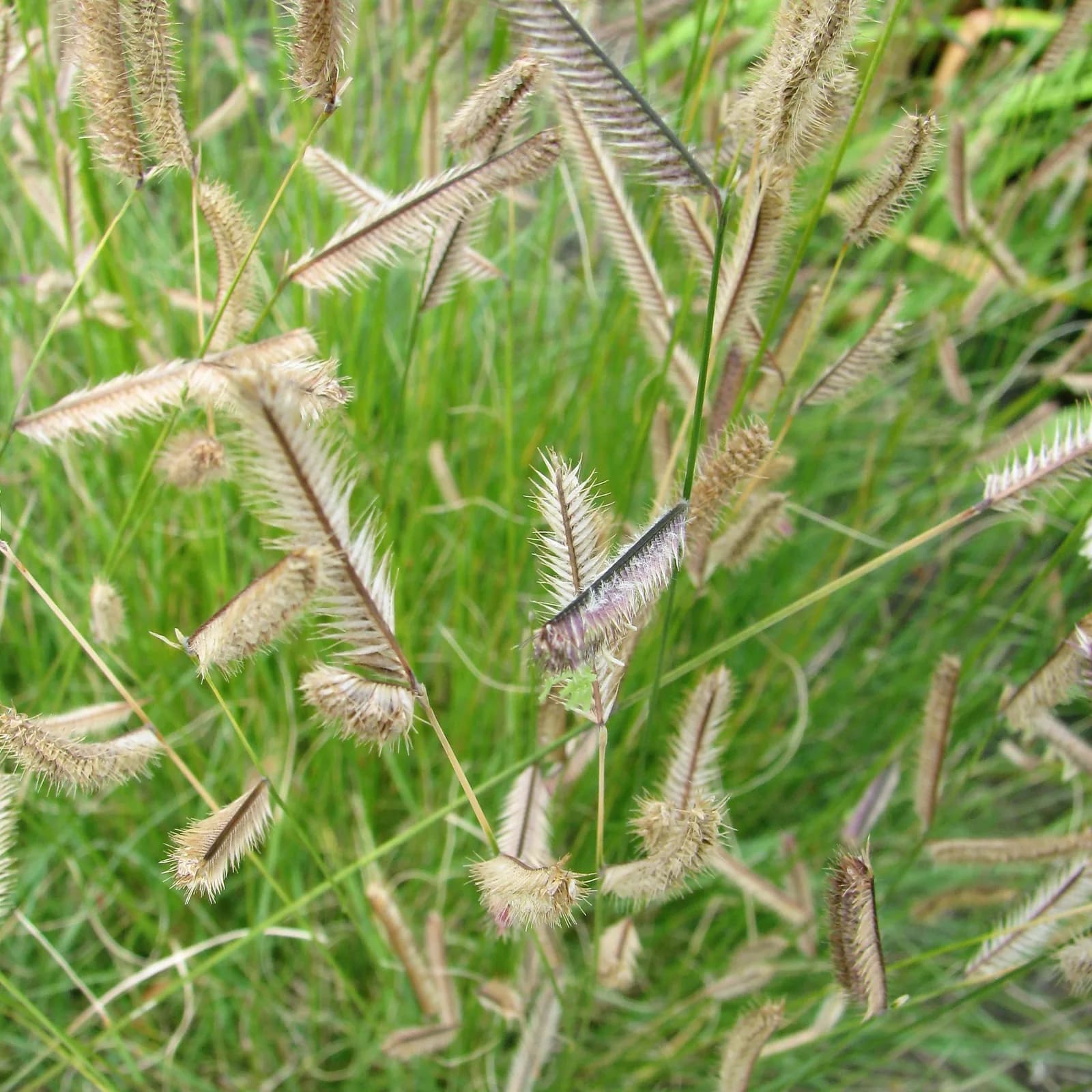
Photo: Agnieszka Kwiecień, Nova, CC BY-SA 4.0, via Wikimedia Commons
Grasses, sedges and wildflowers
Blue grama
Bouteloua gracilis 'Blonde Ambition'
Blue grama is a deciduous grass and sedge that reaches about 1 feet at maturity, with a rapid growth rate. Foliage normally no more than 4 inches high, seedheads 1 to 2 feet. In the wild it grows in dry prairies; plains. A dominant grass in dry shortgrass prairies. An understory grass in moister, mixed prairies.
Water
Low
Light
Sun
Hardiness
Zone 2
Mature height
1 ft
Sizes and pricing for this plant are being confirmed for the coming season.
Notify me when sizes are set
Growing guide
- Growth habit
- Deciduous Grass/Grass-like
- Mature size
- Foliage normally no more than 4 inches high, seedheads 1 to 2 feet.
- Growth rate
- Rapid
- Water needs
- Low; high drought tolerance once established
- Soil moisture
- Dry
- Light
- Sun
- Cold hardiness
- To -43°F (about USDA Zone 2)
- Salt tolerance
- Medium
- Bloom
- Yellow · Jul, Aug, Sep, Oct
- Grows in
- Dry prairies; plains. A dominant grass in dry shortgrass prairies. An understory grass in moister, mixed prairies.
- Native range
- Western North American from southern Canada to southern Mexico. Western Ontario to Alberta, south through Illinois to western Missouri, Texas, and southern California, through much of Mexico.
Wildlife and uses
Graze, Seeds-granivorous birds
Attracts: Birds, Butterflies
The most drought-tolerant native turf grass, more so than Buffalograss. Can survive with as little as 7 inches of rain annually. The drier it is, the less likely it will be to form a solid mat by rhizomes; it will stay in separate clumps. For this reason, it is often mixed with Buffalograss and/or wildflowers for a solid cover. The taller you let it grow, the less water it will need, because its roots will be shaded.
Good for: Restoration, Wildlife, Landscape
Sources
Hardiness zone is estimated from the USDA minimum temperature. Uses are suggested from USDA plant traits.