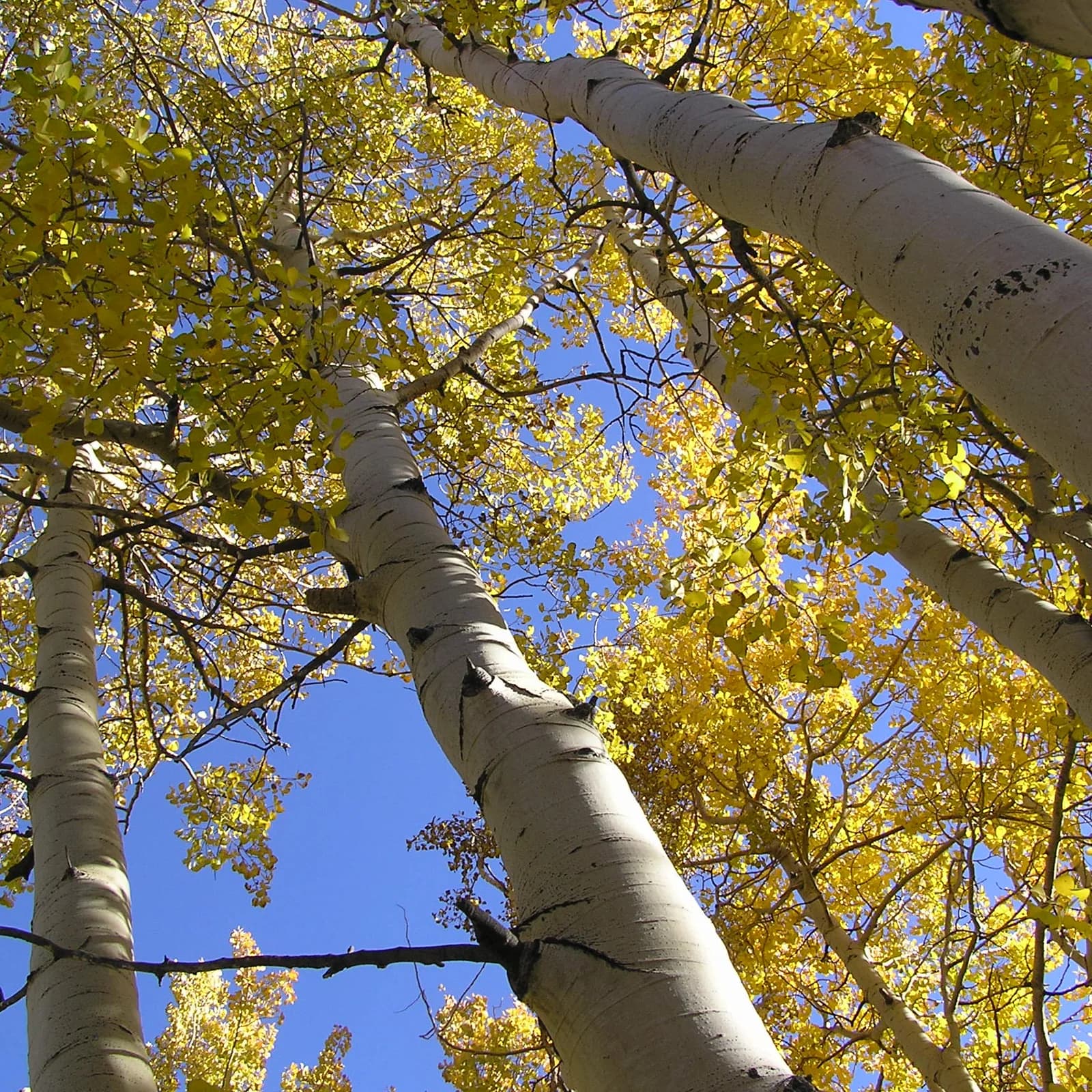
Photo: Scott Catron, CC BY 2.5, via Wikimedia Commons
Trees and shrubs
Quaking aspen
Populus tremuloides
Quaking aspen is a deciduous tree that reaches about 65 feet at maturity, with a rapid growth rate. Up to about 100 feet tall, often shorter. Trunk to about 3 feet in diameter. In the wild it grows in stream banks; moist, low areas; moist, upland woods; disturbed areas.
Water
High
Light
Sun, Part shade, Shade
Hardiness
Zone 1
Mature height
65 ft
| Size | Each | At $10,000+ order | Quantity |
|---|---|---|---|
| 1 gal | $6.40Retail $9.99 | $5.76 | |
| 2 gal | $9.80 | $8.82 | |
| 5 gal | $21.00 | $18.90 |
Orders of $10,000.00 or more get an extra 10% off, applied automatically.
$0.00 in cart$10,000.00
Growing guide
- Growth habit
- Deciduous Tree
- Mature size
- Up to about 100 feet tall, often shorter. Trunk to about 3 feet in diameter
- Growth rate
- Rapid
- Water needs
- High; low drought tolerance once established; low tolerance of saturated soil
- Soil moisture
- Dry, Moist, Wet
- Light
- Sun, Part Shade, Shade
- Cold hardiness
- To -70°F (about USDA Zone 1)
- Salt tolerance
- Medium
- Bloom
- Yellow, Green, Brown · Mar, Apr, May, Jun
- Grows in
- Stream banks; moist, low areas; moist, upland woods; disturbed areas
- Native range
- In cooler areas and mountains almost throughout North America, from Alaska and Labrador in the north through all major mountain chains in the US to mtns of Mexico as far south as Puebla in central Mexico
Wildlife and uses
Aspens are host to a wide array of birds, mammals, and butterflies. Seeds-granivorous birds, Browse
Attracts: Birds, Butterflies
Quaking aspen reproduces rapidly from seed and root suckers. It is short-lived and plagued by disease and insect problems, but is practically indifferent to soil conditions. In any soil, weeding around the tree can boost its growth surprisingly. Aspen can be grown in a clump by periodically removing the older, damaged stems, allowing new sprouts to fill in. Western material is often referred to as var. aurea .
Good for: Restoration, Riparian, Erosion control, Wildlife, Landscape
Sources
Hardiness zone is estimated from the USDA minimum temperature. Uses are suggested from USDA plant traits.