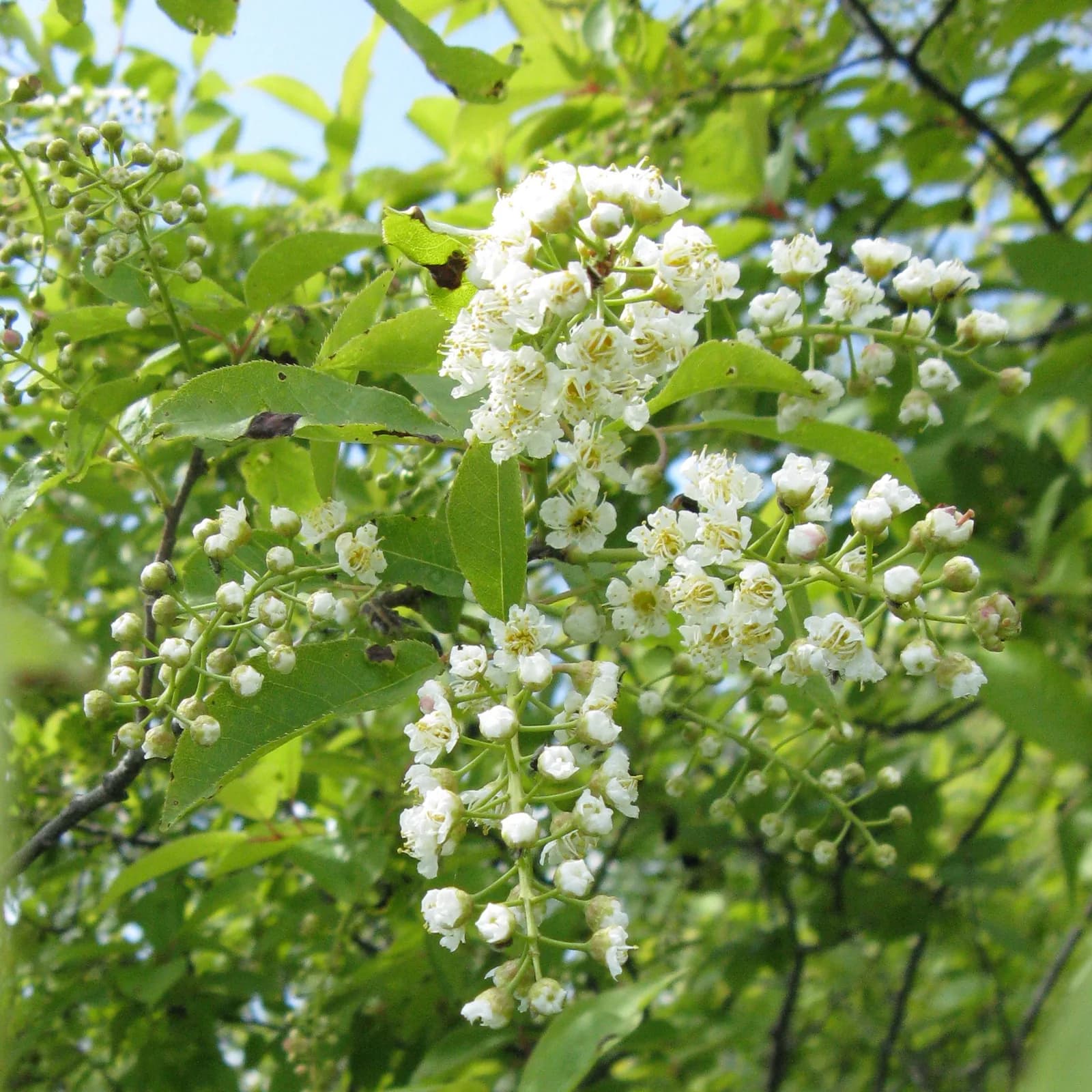
Photo: Nadiatalent, Public domain, via Wikimedia Commons
Trees and shrubs
Chokecherry
Prunus virginiana
Chokecherry is a deciduous tree that reaches about 25 feet at maturity, with a rapid growth rate. Up to about 30 feet tall. In the wild it grows in moist woods; stream banks; prairie hillsides; fence rows; rocky bluffs; roadsides.
Water
Moderate
Light
Sun, Part shade, Shade
Hardiness
Zone 2
Mature height
25 ft
| Size | Each | At $10,000+ order | Quantity |
|---|---|---|---|
| 1 gal | $6.40Retail $9.99 | $5.76 | |
| 2 gal | $9.80 | $8.82 | |
| 5 gal | $21.00 | $18.90 |
Orders of $10,000.00 or more get an extra 10% off, applied automatically.
$0.00 in cart$10,000.00
Growing guide
- Growth habit
- Deciduous Tree
- Mature size
- Up to about 30 feet tall.
- Growth rate
- Rapid
- Water needs
- Moderate; medium drought tolerance once established; medium tolerance of saturated soil
- Soil moisture
- Dry, Moist
- Light
- Sun, Part Shade, Shade
- Cold hardiness
- To -43°F (about USDA Zone 2)
- Salt tolerance
- Medium
- Bloom
- White · Apr, May, Jun, Jul
- Grows in
- Moist woods; stream banks; prairie hillsides; fence rows; rocky bluffs; roadsides
- Native range
- Nf. to B.C., s. to NC, TN, n. AR, TX & s. CA
Wildlife and uses
Blue-black edible cherries, reputedly makes good jelly. Important food for wildlife in July and August. Chokecherry is moderately palatable to all classes of livestock, although it is more heavily browsed by domestic sheep than by cattle. It is a preferred mule deer browse on many winter ranges throughout the Intermountain West and Northern Great Plains. Chokecherry is widely regarded as an important wildlife food plant and provides habitat, watershed protection, and species diversity. Fruits, leaves, and twigs are utilized. Large mammals including bears, moose, coyotes, bighorn sheep, prongho
Attracts: Butterflies
Chokecherry is remarkably shade tolerant and has impressive resilience under variable growing conditions. Branches break off easily in ice storms. Western material is var. demissa and var. melanocarpa.
Good for: Restoration, Riparian, Erosion control, Wildlife, Landscape
Sources
Hardiness zone is estimated from the USDA minimum temperature. Uses are suggested from USDA plant traits.