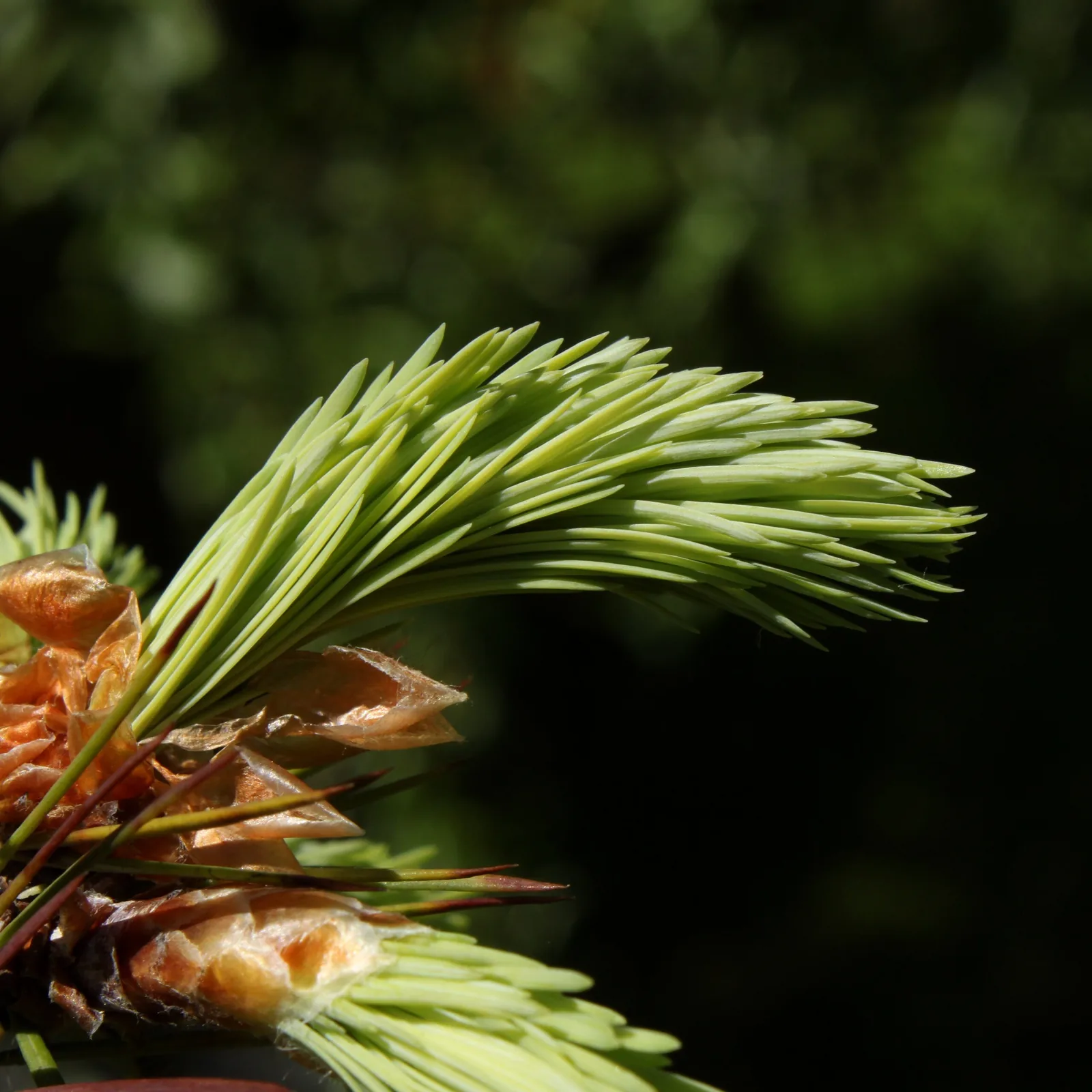
Photo: Crusier, CC BY-SA 3.0, via Wikimedia Commons
Trees and shrubs
Douglas fir
Pseudotsuga menziesii
Douglas fir is an evergreen tree that reaches about 200 feet at maturity, with a moderate growth rate. Up to about 300 feet tall, often much shorter. In the wild it grows in moist, well-drained, mountain sites.
Water
Moderate
Light
Part shade
Hardiness
Zone 3
Mature height
200 ft
| Size | Each | At $10,000+ order | Quantity |
|---|---|---|---|
| 1 gal | $6.40Retail $9.99 | $5.76 | |
| 2 gal | $9.80 | $8.82 | |
| 5 gal | $21.00 | $18.90 | |
| 15 gal | $86.00 | $77.40 | |
| 8-10 ft B&B | $143.00 | $128.70 | |
| 12-14 ft B&B | $286.00 | $257.40 | |
| 14-16 ft B&B | $358.00 | $322.20 |
Orders of $10,000.00 or more get an extra 10% off, applied automatically.
$0.00 in cart$10,000.00
Growing guide
- Growth habit
- Evergreen Tree
- Mature size
- Up to about 300 feet tall, often much shorter.
- Growth rate
- Moderate
- Water needs
- Moderate; low drought tolerance once established; low tolerance of saturated soil
- Soil moisture
- Dry
- Light
- Part Shade
- Cold hardiness
- To -33°F (about USDA Zone 3)
- Salt tolerance
- Low
- Bloom
- Red, Yellow · Apr
- Grows in
- Moist, well-drained, mountain sites
- Native range
- Mts. of Alt. to w. TX & n. Mex., w. to B.C. & CA
Wildlife and uses
Nesting site, Cover, Seeds-Small mammals, Seeds-granivorous birds
Attracts: Birds Butterflies and Moths of North America (BAMONA) Pine White ( Neophasia menapia ) Adult Food Source Learn more at BAMONA
Douglas fir in the Pacific Northwest can reach 300 ft. At the other extreme, some Douglas firs in Big Bend National Park grow only 15 ft. tall. Branches grow to the ground on solitary trees; trees in groves self-prune, revealing the thick bark. The tree fails on dry, poor soils; in crowded spaces; or in high winds. In the proper environment the tree is fast-growing and seedlings are likely to establish.
Good for: Restoration, Wildlife, Landscape
Sources
Hardiness zone is estimated from the USDA minimum temperature. Uses are suggested from USDA plant traits.