Photo: Nichole Ouellette, CC BY 4.0, via Wikimedia Commons
Trees and shrubs
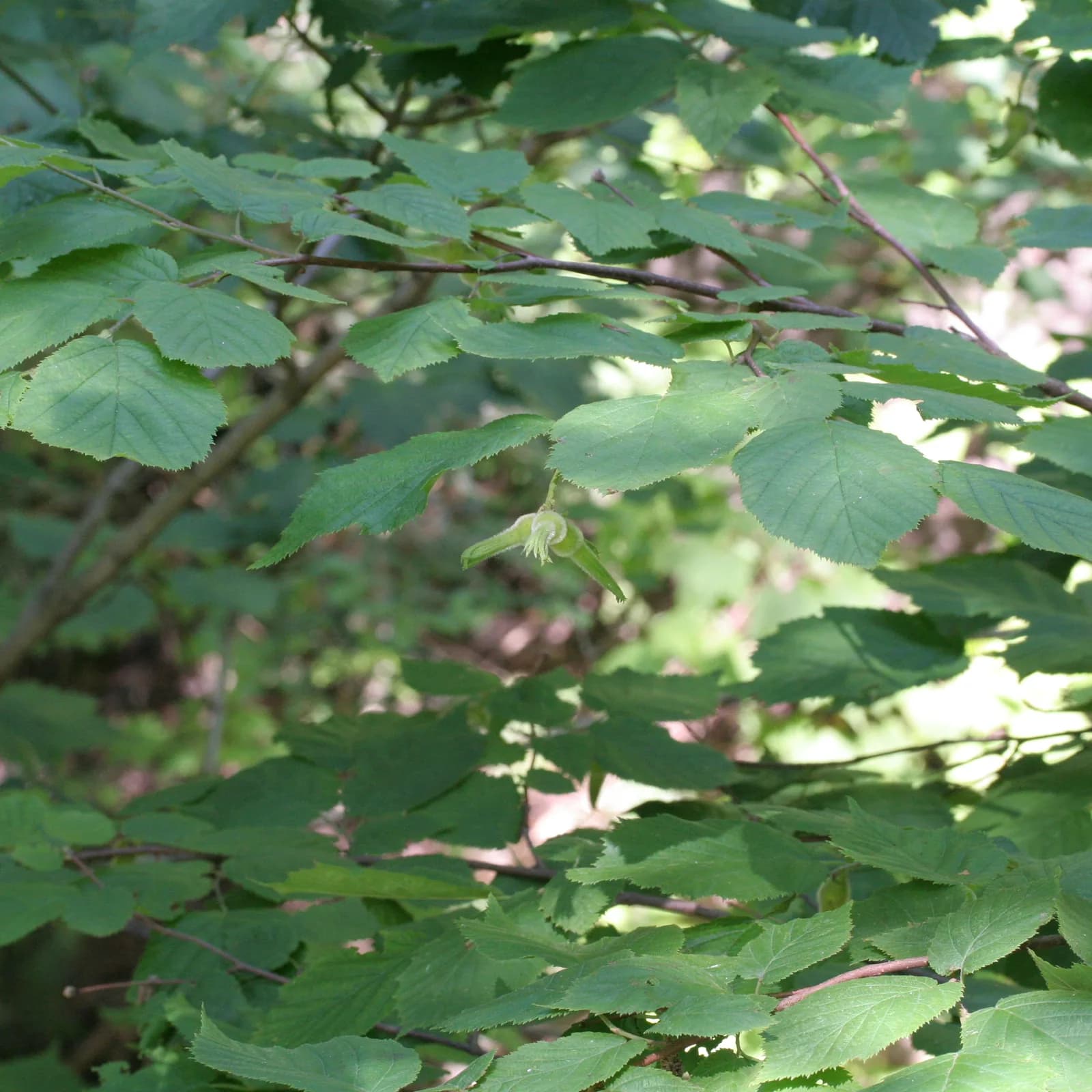
Beaked hazelnut
Corylus cornuta
Beaked hazelnut is a deciduous shrub that reaches about 15 feet at maturity, with a moderate growth rate. Shrub up to about 25 feet tall. Sometimes grows as a tree up to about 45 feet tall. In the wild it grows in upland forests; thickets.
Water
Moderate
Light
Sun, Part shade, Shade
Hardiness
Zone 2
Mature height
15 ft
| Size | Each | At $10,000+ order | Quantity |
|---|---|---|---|
| 1 gal | $9.30Retail $9.99 | $8.37 | |
| 2 gal | $12.15 | $10.94 | |
| 5 gal | $26.00 | $23.40 | |
| 15 gal | $86.00 | $77.40 |
Orders of $10,000.00 or more get an extra 10% off, applied automatically.
$0.00 in cart$10,000.00
Growing guide
- Growth habit
- Deciduous Shrub
- Mature size
- Shrub up to about 25 feet tall. Sometimes grows as a tree up to about 45 feet tall.
- Growth rate
- Moderate
- Water needs
- Moderate; medium drought tolerance once established
- Soil moisture
- Moist
- Light
- Sun, Part Shade, Shade
- Cold hardiness
- To -47°F (about USDA Zone 2)
- Bloom
- Yellow, Green · Mar, Apr, May, Jun
- Grows in
- Upland forests; thickets
- Native range
- Nf. to B.C., s. to GA mts., MI, n.e. IA & c. CA
Wildlife and uses
The fruit is a smooth nut with a very hard shell. The nuts are rich in protein and fat a favourite of red squirrels and chipmunks. Snowshoe hare browse heavily on young shoots during the winter. The nuts are a preferred food of ruffed grouse, pheasant, hairy woodpecker and blue jay. The winter buds and spring catkins are a valuable protein source for ruffed grouse and American woodcock. (Shrubs of Ontario)
Attracts: Birds, Butterflies
Sometimes considered a more "refined shrub " than C. americana . Can be pruned anytime. Tends to sucker from the roots and must often be thinned out. No extensive disease or insect problems. The west coast variety is Corylus cornuta var. californica .
Good for: Restoration, Hedgerow, Wildlife, Landscape
Sources
Hardiness zone is estimated from the USDA minimum temperature. Uses are suggested from USDA plant traits.