Photo: Didier Descouens, CC BY-SA 4.0, via Wikimedia Commons
Trees and shrubs
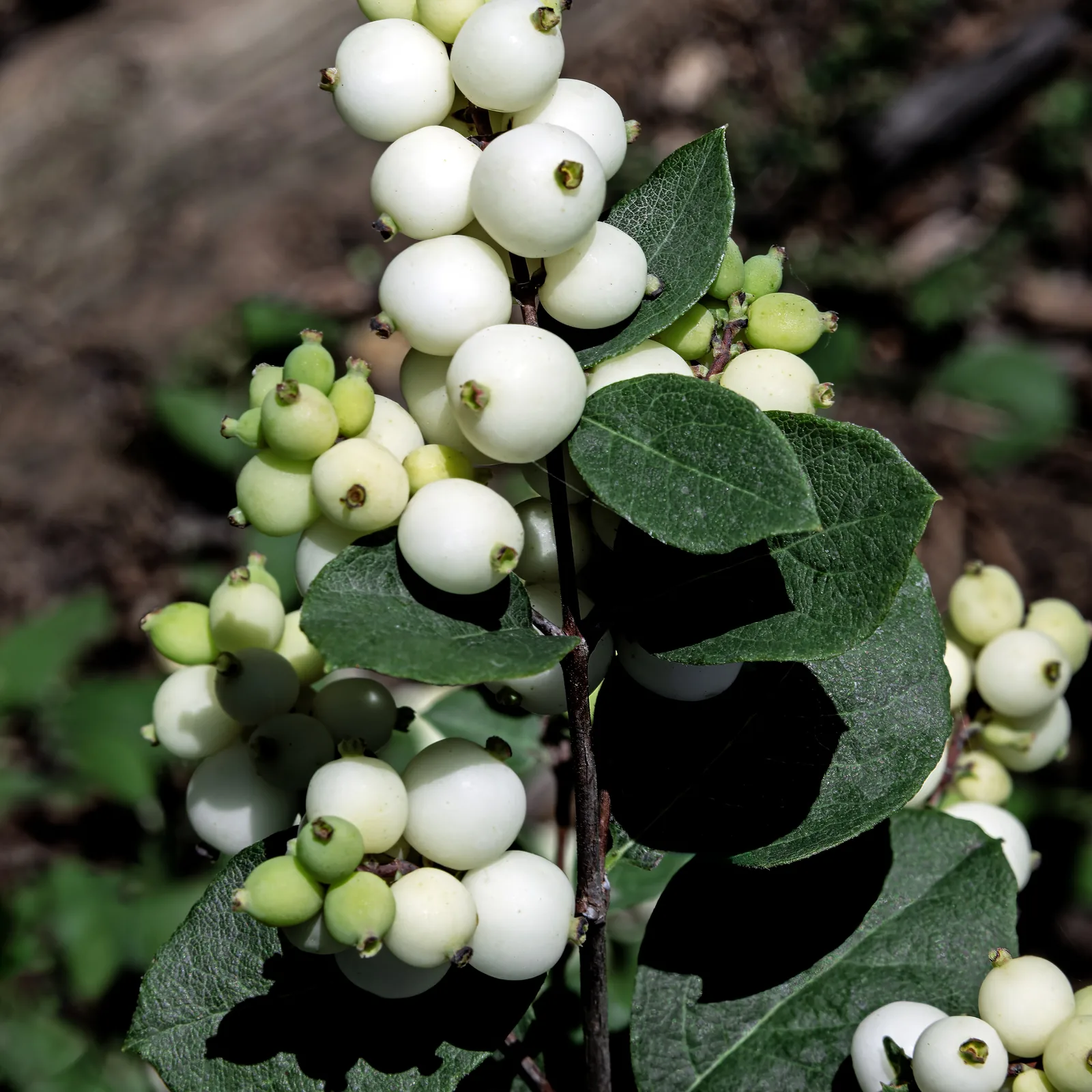
Common snowberry
Symphoricarpos albus
Common snowberry is a deciduous shrub that reaches about 3 feet at maturity, with a moderate growth rate. Up to about 5 feet tall, often shorter. In the wild it grows in wooded hillsides; rocky, open slopes.
Water
Moderate
Light
Sun, Part shade, Shade
Hardiness
Zone 3
Mature height
3 ft
| Size | Each | At $10,000+ order | Quantity |
|---|---|---|---|
| 1 gal | $5.70Retail $9.99 | $5.13 | |
| 2 gal | $9.80 | $8.82 | |
| 5 gal | $21.00 | $18.90 |
Orders of $10,000.00 or more get an extra 10% off, applied automatically.
$0.00 in cart$10,000.00
Growing guide
- Growth habit
- Deciduous Shrub
- Mature size
- Up to about 5 feet tall, often shorter.
- Growth rate
- Moderate
- Water needs
- Moderate; high drought tolerance once established
- Soil moisture
- Dry, Moist
- Light
- Sun, Part Shade, Shade
- Cold hardiness
- To -38°F (about USDA Zone 3)
- Salt tolerance
- Medium
- Bloom
- White, Pink · Jun, Jul
- Grows in
- Wooded hillsides; rocky, open slopes
- Native range
- Que. to AK, scattered southward to MA, WV, WI, n.e. IA, CO & CA
Wildlife and uses
Songbirds, gamebirds, small mammals and browsers use this plant for food, cover, and nesting sites.
Attracts: Birds Butterflies and Moths of North America (BAMONA) Vashti sphinx ( Sphinx vashti ) Larval Host Learn more at BAMONA
Anthracnose, rusts, powdery mildews and berry rot can be frequent problems. Var. albus is the easterly variety; var. laevigatus is a more erect, western plant.
Good for: Restoration, Erosion control, Wildlife, Landscape
Sources
Hardiness zone is estimated from the USDA minimum temperature. Uses are suggested from USDA plant traits.